

Intrinsic motivation: making room for ‘I want to try’
Intrinsic motivation means doing something for its interest or enjoyment. Self-determination theory describes the importance of autonomy, competence and connection with others. A routine may not be enjoyable every day; choices, practical help and a warm relationship are useful starting points for discussing how we invite children to participate. Center for Self-Determination Theory
In the app, a family can choose a song, name a task in familiar words and make the goal manageable. A grown-up can join in rather than asking the timer to do the parenting. The aim is to leave room for satisfaction in finishing, with no points total or leaderboard to protect.
A growth mindset includes help and different strategies
A growth mindset concerns the possibility of developing abilities. Responding to a challenge can include trying a different approach, seeking help and using feedback, as well as effort. ‘Try harder’ is not the only response to something difficult. MIT Teaching + Learning Lab
If a routine step is too hard, make it smaller, change the song or offer help. A duck ending leaves the step ready for another try. You can also choose Done without timer when the task is already done, or skip a step. The app is not a test of a child’s worth, and these design choices do not establish a measured mindset benefit.
Family reflection: kindness, patience and perseverance
My day offers optional intentions and reflections. Choose kindness, patience, courage, perseverance, compassion or your own idea. Talk about an ordinary moment: ‘When waiting was hard, what did you try?’ Words, a drawing or a local voice story can help a family remember. A child does not have to turn every moment into a lesson.
The family acknowledges trying, including on difficult days; the app does not infer a virtue from completing a timer. Thirteen animal companions can join the garden after acknowledged effort, and a matching gem necklace appears after ten distinct reflected attempts. These visible milestones exist, so we do not describe reflections as having no rewards at all. There are no streaks, rankings or automatic moral judgements.
These conversations can touch on emotional awareness, empathy and social-emotional learning. Those terms describe the topics families can explore, rather than a validated curriculum or an assessment of a child. Parents can hide reflections or turn My day off.
Flexible goal setting with Music Practice and Beaty
In Premium’s Music Practice, a parent sets a goal in minutes over days or weeks. A child can play, sing or clap as Beaty responds with dances. Take a break, resume later or add missed practice time. A routine practice visit has its own length and contributes once to the larger goal; there are no streaks, scores or lost progress.
Beaty responds to sound and does not judge musical accuracy or teach an instrument. A microphone is required, and practice is unavailable on TV. Sound is analyzed on the device without recording or uploading. Goals and aggregate practice time are family records, not a grading system.
Keep the conversation concrete
- Choice: ‘Would you like this song or that one?’
- Effort and strategy: ‘You tried the sleeve a different way. Did that help?’
- Connection: ‘That was difficult. Would you like some help?’
- Reflection: ‘When did we try being patient today?’
- A next step: ‘What would you like to try next time?’
Lickety Split
Start with one manageable task
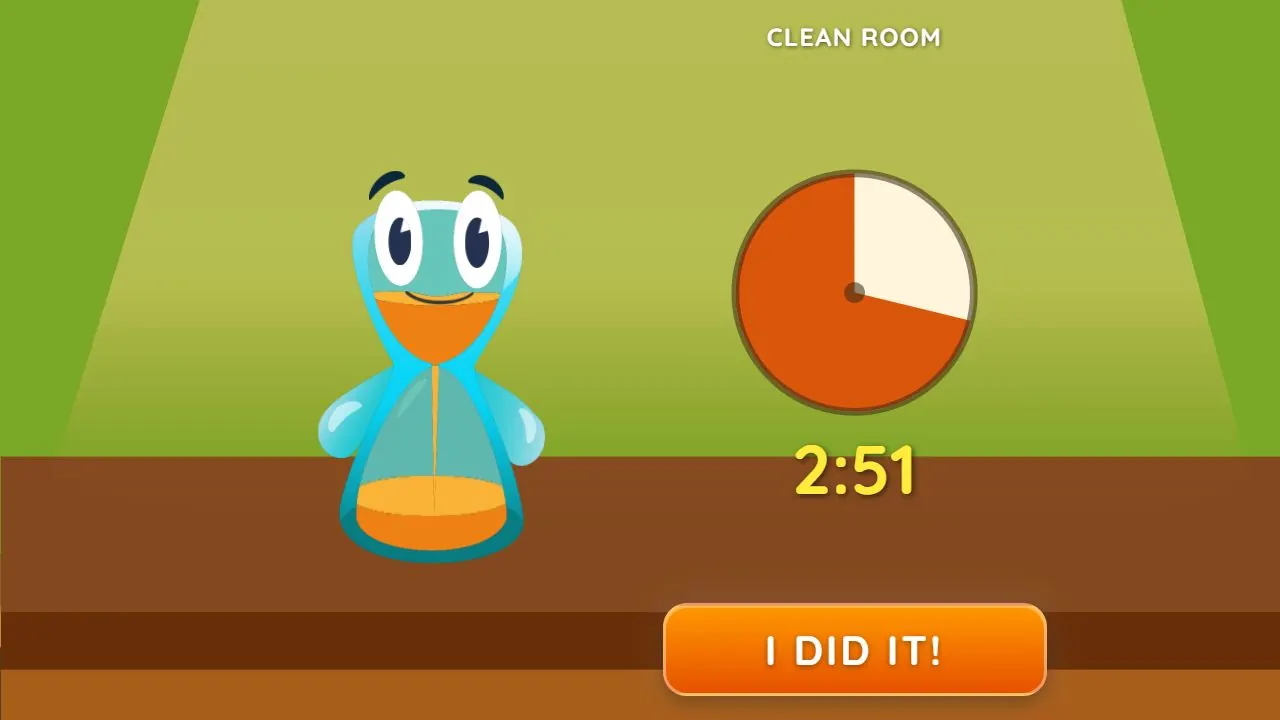
For a clean-up task, agree on a small goal such as putting the blocks in their box. Help if needed and use a song that feels comfortable. Afterwards, ask what helped. A separate My day reflection can acknowledge an attempt at cooperation or perseverance; the timer does not award that judgement automatically.
Words to try
“We put the blocks away together. What helped us get started?”
Sources and further reading
Related guides
Visual schedules for kids: now, next and finished
Make a picture schedule for a morning or bedtime routine. Learn how now-and-next cards, a finished pocket and a visual timer work together.

How to help kids clean up toys and tidy their room
Turn “clean your room” into one manageable job. Try a clear sorting target, a grown-up’s first example and a visual and musical cleanup timer.

A children’s bedtime routine: pyjamas, teeth and reading
Make the next bedtime step clear with prepared pyjamas, brushing together and reading. Choose musical or visual cues that suit your child.