

A toothbrushing routine to try tonight
- Get the brush and age-appropriate fluoride toothpaste ready before introducing the timer. Follow your dentist’s advice on toothpaste and technique.
- Offer a manageable choice: “Would you like to stand here or on your step?” Keep brushing itself part of the routine.
- Explain the cue before starting: “We’ll brush together while the music plays. We keep brushing until the song finishes.”
- Help with brushing and cover all tooth surfaces. Move around the mouth rather than staying on the easiest spot.
- At the end, acknowledge the effort: “You kept brushing. Let’s put the brush back ready for tomorrow.”
Children need help learning how to brush. NHS guidance recommends supervising brushing until at least age seven and helping as needed; time alone does not ensure effective brushing. NHS
Why at least two minutes, and why a song?
The American Dental Association recommends brushing twice daily for at least two minutes. It suggests favorite songs and brushing apps as ways to make the routine engaging. American Dental Association
Music and visuals reinforce each other: your child can hear time passing while looking at the toothbrush, then glance at the timer to see progress. That combination is useful for children of all kinds who are learning what “two minutes” means. The goal is steady brushing until the song ends.
If starting is the hardest part
Start together before asking for independence. You might say, “I’ll help with the first part.” If the brush, taste or sensation is uncomfortable, a countdown will not remove that discomfort. Ask your dentist about suitable alternatives and get dental advice if brushing hurts.
If your child stops before the cue ends
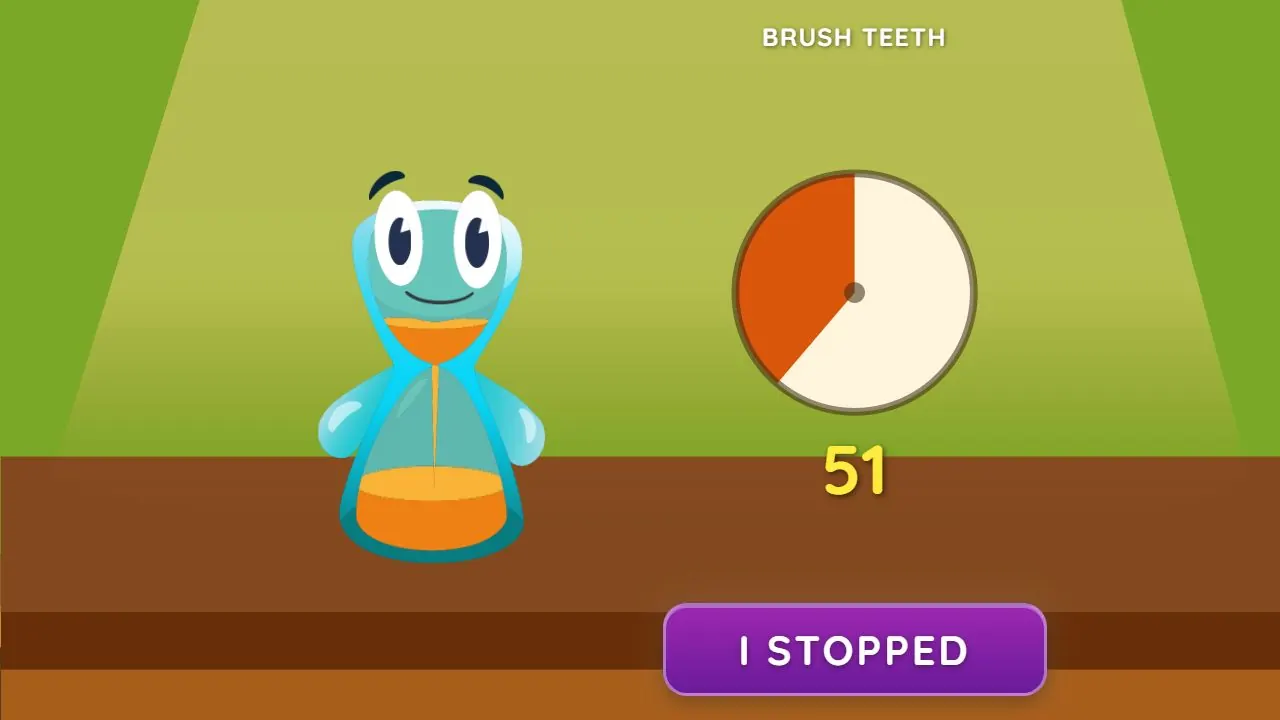
If your child stops brushing early, tap I Stopped for them. This plays the duck sequence. The duck is intended to turn an unfinished attempt into a lighthearted moment, without making the child feel they have failed or done something wrong.
Keep your response playful: “The duck joined us today! Tomorrow let’s keep brushing and see what happens without the duck.” Offer any help your child needs. The aim is to leave them wanting another go and looking forward to the success ending, not upset about today’s attempt.
Find a brushing song that feels right
We tested and selected the task songs to make everyday routines playful and encouraging, rather than pressuring, for most children. Every child is different. Listen together and notice which music and pace feel right for your child.
To use a favorite, choose Your Song, Your Length (Custom Song in older versions of the app) in either timer menu and pick a song stored on your device. Choose one with a length that suits the task; the song’s own length becomes the timer, and the visual timer follows along. Use it in the iPhone or Android app, or in a browser on Android. On iPhone, use the installed app to choose your own song.
For brushing, choose a song that gives you time to brush for at least two minutes after getting the brush ready. Use Your Song, Your Length from the Count Down menu for this keep-going task.
The same music-and-visual combination is useful for everyday routines for all kids. Autistic children and children with ADHD can find it especially helpful when they need a clear beginning, progress cue and ending. These guides explain how to introduce and adapt it.
Lickety Split
Try the Brush Teeth task in Lickety Split
Start Brush Teeth in Lickety Split. Its song, spoken prompt and animated timer work together to make the brushing period clear. Brush together until the music ends for the success ending. If your child stops early, you tap “I Stopped” to let the duck join in and make the attempt a playful moment.
Words to try
“We’ll brush together while the music plays. We keep brushing until the song finishes.”
Sources and further reading
Related guides
A children’s bedtime routine: pyjamas, teeth and reading
Make the next bedtime step clear with prepared pyjamas, brushing together and reading. Choose musical or visual cues that suit your child.
How to help kids get dressed and out the door
Try prepared clothes, one clear step and music with visual progress for getting dressed. Find a song and length that suit your child’s morning routine.